

Understanding Ankle Inversion Injuries
An ankle inversion injury occurs when the foot rolls inward, placing stress on the ligaments along the outer (lateral) side of the ankle. This type of movement, often referred to as inversion of the ankle, is the most common cause of ankle sprains and can happen during sports, walking on uneven surfaces, or even a simple misstep.
While some inversion ankle sprains are mild and improve with rest, others can involve partial or complete ligament tears that require more structured treatment. Understanding how these injuries happen and how they are treated can help prevent long-term instability and recurring ankle issues.
What Happens During Ankle Inversion
The ankle joint is designed to allow controlled movement in multiple directions, including inversion and eversion. Inversion refers to the foot turning inward, while eversion describes the foot rolling outward. When inversion happens too forcefully or too quickly, it can stretch or tear the ligaments that stabilize the ankle.
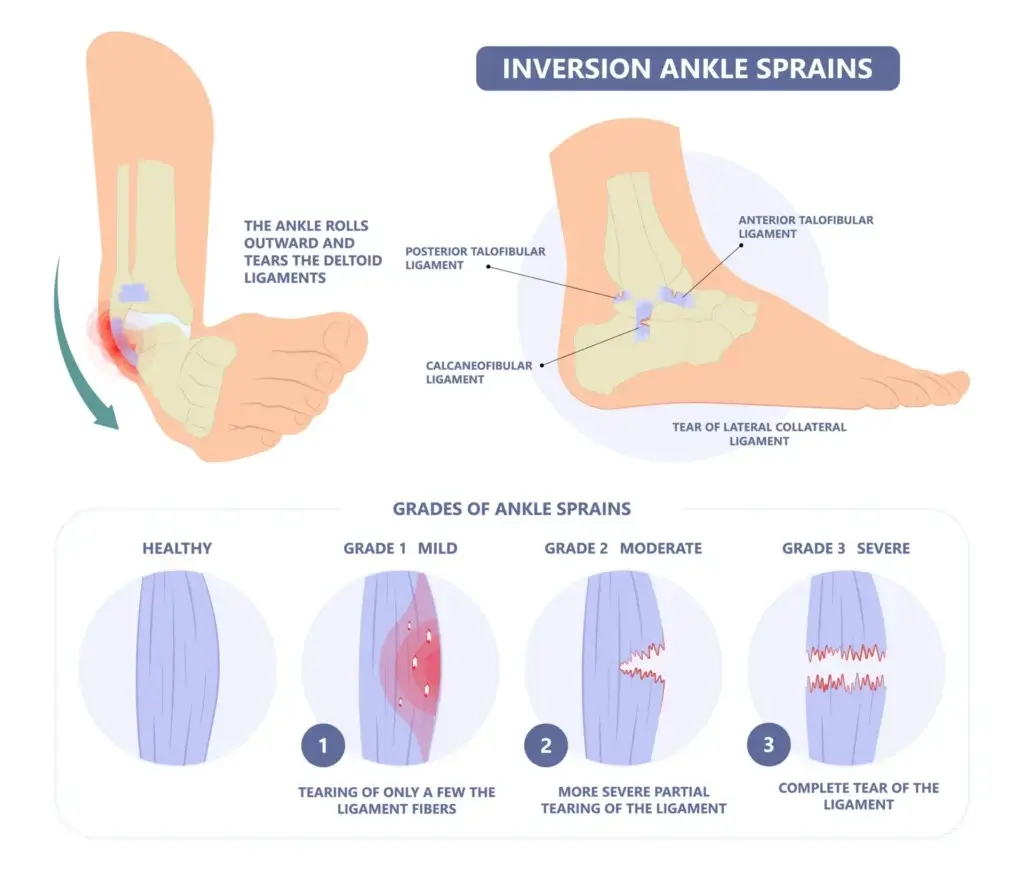
The ligaments most often affected during an inversion ankle sprain are located on the outer side of the joint. These structures help control movement and maintain balance. When injured, they can lead to pain, swelling, and reduced stability, making it difficult to walk or bear weight comfortably.
Common Symptoms of an Inversion Ankle Sprain
Symptoms of an inversion ankle sprain can vary depending on the severity of the injury. Mild sprains may cause temporary discomfort, while more serious injuries can significantly limit movement.
Common symptoms include:
- Pain on the outside of the ankle
- Swelling or bruising around the joint
- Difficulty walking or putting weight on the foot
- A feeling of instability or the ankle “giving out”
- Limited range of motion
If these symptoms persist or worsen, it may indicate a more significant ligament injury that requires evaluation.
Grades of an Inversion Ankle Sprain
Not all inversion ankle sprains are the same. They are typically classified into three grades based on the extent of ligament damage:
- Grade 1 (Mild):
Slight stretching of the ligaments with minor swelling and discomfort. Most people can still walk, though it may be tender. - Grade 2 (Moderate):
Partial tearing of the ligaments, leading to noticeable swelling, bruising, and difficulty putting weight on the ankle. Stability may be reduced. - Grade 3 (Severe):
A complete ligament tear, often causing significant swelling, instability, and an inability to bear weight. This level of injury may require more advanced treatment and longer recovery.
Understanding the severity of an inversion ankle sprain helps guide treatment decisions and expected recovery time. More severe injuries often require structured rehabilitation to restore strength and stability.
Inversion Ankle Sprain Treatment Options
Treatment for an inversion ankle sprain depends on the severity of the injury and how much the ligaments have been affected. In many cases, initial care focuses on reducing swelling and protecting the joint.
Early treatment often includes rest, ice, compression, and elevation to control inflammation. As pain improves, rehabilitation becomes an important part of recovery. This may involve ankle inversion exercises and strengthening movements that help restore stability and prevent future injuries.
For more advanced injuries, additional support such as bracing or taping, including techniques like lateral ankle sprain KT tape, may be recommended. In cases where instability persists or ligaments do not heal properly, further evaluation may be needed to determine the best course of care.
Recovery Time and Rehabilitation
Lateral ankle sprain recovery time can vary widely depending on the severity of the injury. Mild sprains may improve within a few weeks, while more significant ligament damage can take several weeks or longer to fully heal.
Rehabilitation focuses on gradually restoring strength, balance, and flexibility. Exercises such as ankle inversion stretches and controlled strengthening movements help rebuild stability in the joint. Consistency during this phase is important, as returning to activity too soon can increase the risk of reinjury.
Preventing Future Ankle Inversion Injuries
Once an ankle has been injured, it may be more vulnerable to future sprains if not properly rehabilitated. Preventive strategies can help reduce the risk of repeated inversion injuries.
Helpful prevention methods include:
- Strengthening the muscles that support the ankle
- Improving balance and coordination
- Wearing supportive footwear during activity
- Avoiding uneven surfaces when possible
- Continuing mobility and flexibility exercises
These steps can help maintain joint stability and reduce strain on the ligaments during movement.
When to Seek Care for an Ankle Inversion Injury
While some ankle sprains improve with at-home care, persistent pain, swelling, or instability should not be ignored. If the ankle continues to feel weak, painful, or unable to support weight, it may indicate a more serious injury that requires professional evaluation. At Andrews Institute, specialists provide comprehensive foot and ankle care to assess ligament injuries, restore joint stability, and guide recovery. Whether through conservative treatment or advanced care, early evaluation can help prevent long-term complications and support a safe return to activity.