
If knee pain is making it harder to walk, climb stairs, sleep comfortably, or keep up with daily life, it may be time to explore your options.
Andrews Institute Ambulatory Surgery Center offers Mako robotic-assisted knee replacement for patients considering total or partial knee replacement. Mako helps your surgeon plan your procedure around your unique anatomy, then supports that plan during surgery with robotic-guided precision.
Why Surgeons and Patients Choose Mako
Adding Mako robotic technology to the suite of services at Andrews Institute isn’t just about innovation for innovation’s sake—it’s about giving patients the very best tools and techniques available for a safer, smoother recovery.
Less Pain After Surgery
More precise bone preparation and less tissue disruption often mean less post-operative pain and a more comfortable recovery.
Faster Return to Daily Life
Greater accuracy during surgery supports a more efficient procedure and shorter path back to walking, driving, and the activities you enjoy.
Implant Placement You Can Trust
Real-time robotic guidance helps your surgeon position the implant with exceptional accuracy, which may support longer-lasting results and more natural movement.
Personalized to Your Anatomy
Every procedure starts with a CT-based 3D model of your knee. Your surgeon plans around your joint structure, not a generic template. The result is a replacement tailored specifically to your body.
These are just a few of the advantages of robotic knee replacement with Mako, especially when it’s in the hands of a world-class surgical team. At Andrews Institute, we believe in combining the best of both worlds: leading-edge technology and compassionate, expert care designed entirely around you.
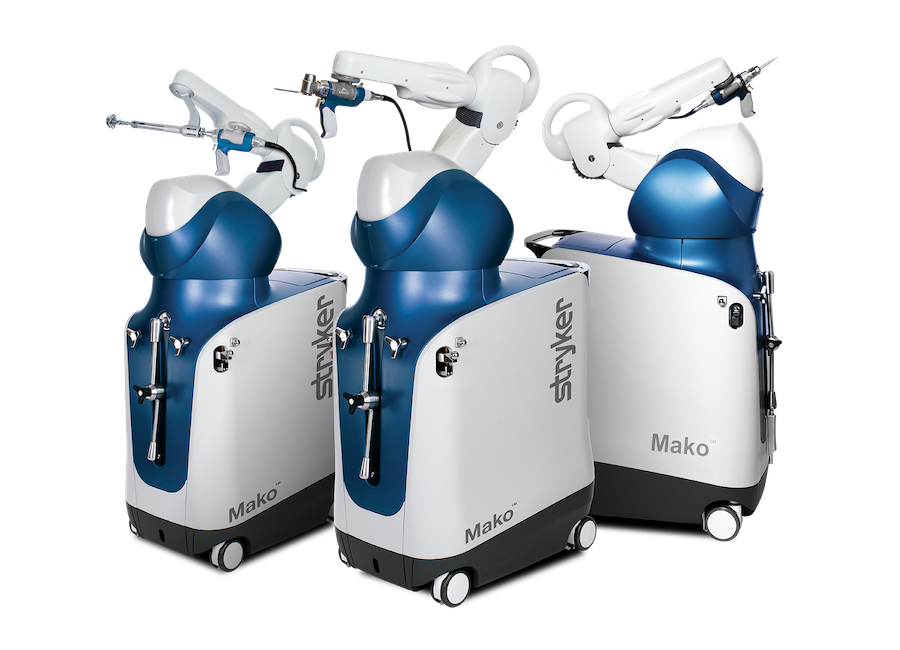
What Is Mako and How Does It Work?
Mako is a robotic-assisted technology your surgeon uses during knee replacement procedures. It does not perform surgery on its own. Instead, it gives your surgeon a detailed, 3D view of your joint and provides guided support during the procedure to help with precision, implant alignment, and placement. Your surgeon is always in control.
Scan
Before surgery, a CT scan creates a detailed 3D model of your knee joint. This gives your surgeon a high-definition map of your unique anatomy, including bone structure, joint alignment, and areas of damage.
Plan
Your surgeon uses that model to build a personalized surgical plan: exactly how much bone to remove, where to position the implant, and how to best restore natural alignment and movement. This planning happens before you ever enter the operating room.
Surgery with Mako
During the procedure, your surgeon follows the personalized plan while guiding Mako’s robotic arm. The system provides real-time feedback and guided boundaries to help keep the procedure within the defined plan, while still allowing your surgeon to adjust as needed. The result is a joint replacement tailored to your body, your condition, and your mobility goals.
Our Mako-Certified Knee Surgeons
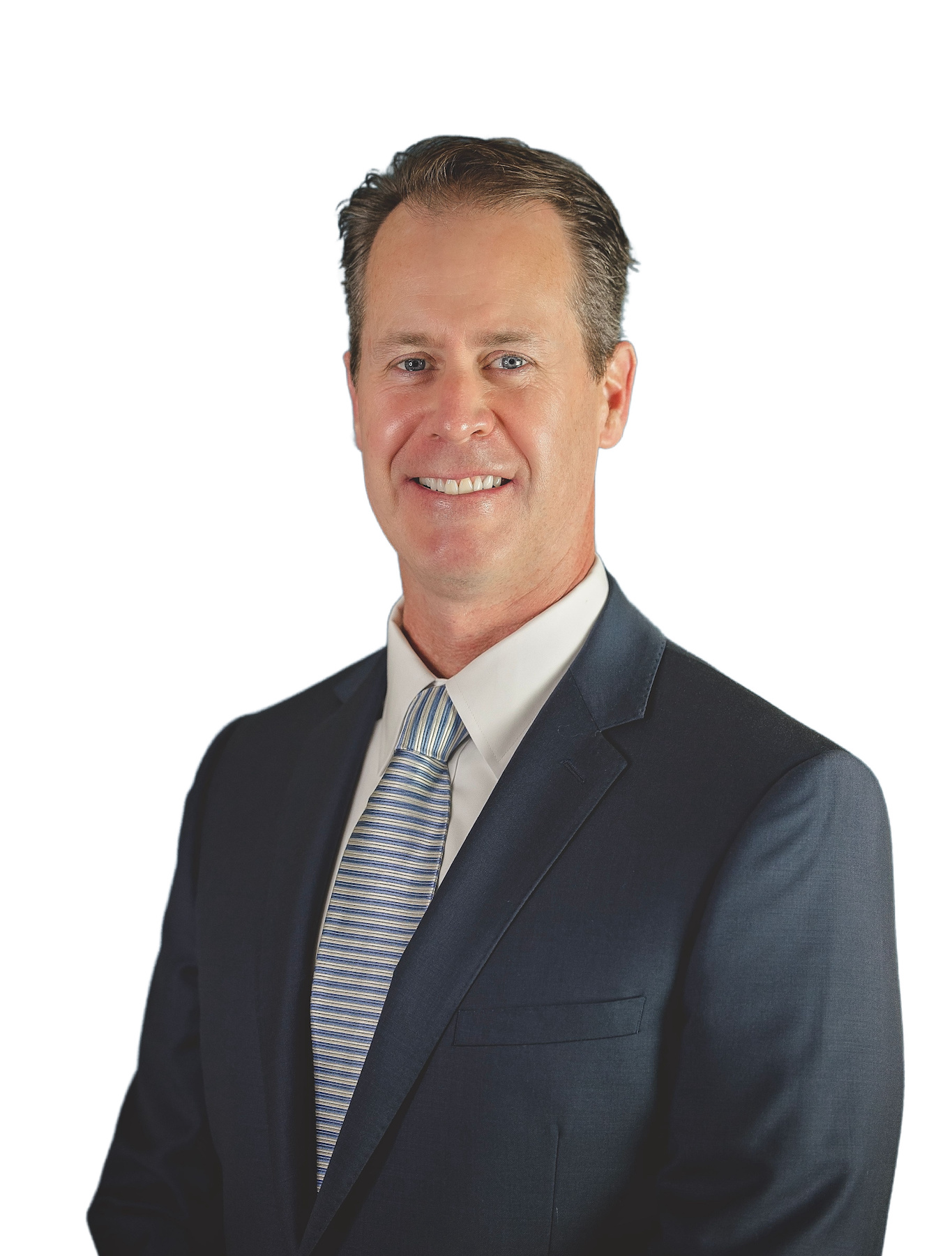
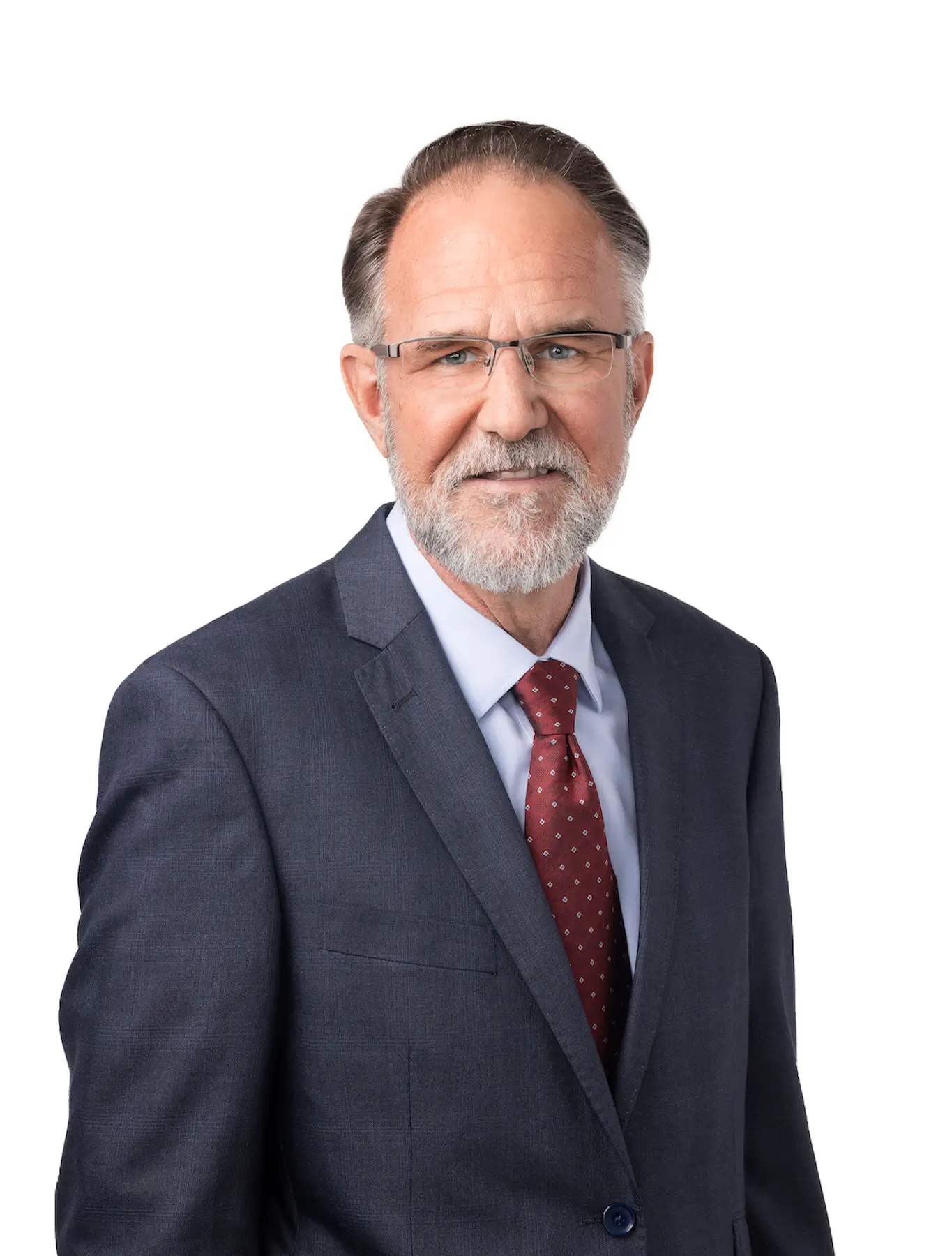
The following orthopaedic surgeons at Andrews Institute are certified to perform Mako robotic-assisted knee replacement:
Ready to connect with a Mako-trained surgeon?
Mako Robotic Knee Replacement
At Andrews Institute, Mako robotic knee replacement can be used for both partial and total knee procedures, depending on how far your arthritis or joint damage has progressed.
Partial Knee Replacement
For patients with early- to mid-stage osteoarthritis affecting only one compartment of the knee, robotic partial knee replacement targets just the damaged area. This approach is ideal for maintaining more of the natural joint and may support a more familiar feel during movement.
Total Knee Replacement
If the arthritis involves multiple areas of the knee, a robotic total knee replacement may be the recommended option. With Mako, your surgeon has greater control during the procedure and can tailor the approach to fit your knee’s specific needs, helping to deliver consistent and lasting results.
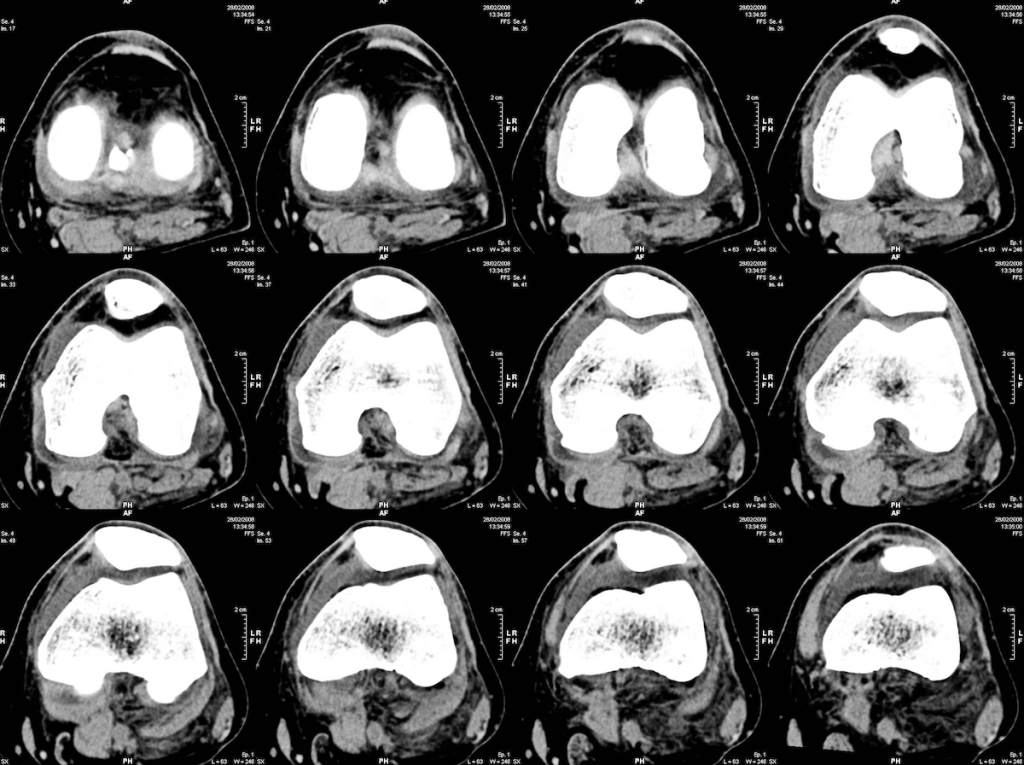
A series of CT scan slices helps create a detailed 3D model of your knee for a personalized surgical plan.
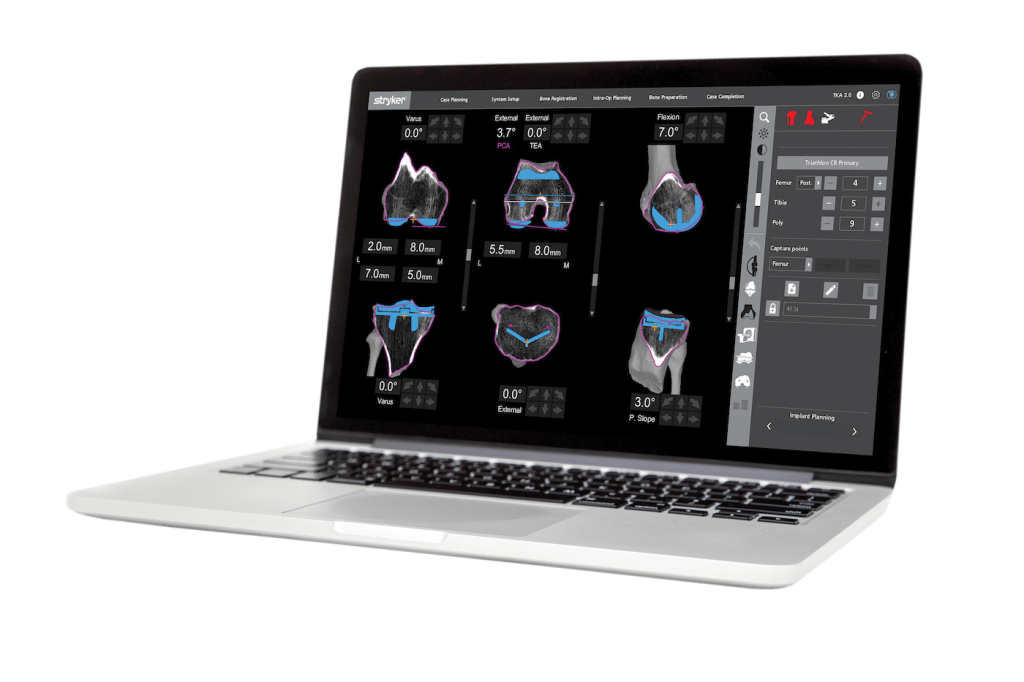
Using Mako SmartRobotics™ technology, your surgeon can precisely and accurately plan every detail of your procedure.
Serving Patients Across Northwest Florida and Beyond
Andrews Institute Ambulatory Surgery Center is located in Gulf Breeze, FL, serving patients throughout Pensacola, Milton, Pace, Navarre, and the greater Northwest Florida region. We also welcome patients traveling from outside the area for specialized care. Our team can help coordinate your visit, from pre-operative planning to post-surgical follow-up.
Take the Next Step: Find a Mako-Trained Surgeon
If knee pain is limiting your daily life, Andrews Institute Ambulatory Surgery Center can help you understand your options. Talk with our team about robotic-assisted knee replacement and next steps on getting connected with one of our Mako-trained surgeons.
Frequently Asked Questions
No. Your surgeon performs the procedure. Mako is a technology that helps your surgeon plan and guide the surgery with greater precision. The surgeon is in control at all times.
Yes. Mako can be used for both total knee replacement and partial (unicompartmental) knee replacement, depending on the extent and location of joint damage.
For many patients, yes. Outpatient joint replacement allows you to return home the same day. Your surgeon will determine if outpatient care is appropriate based on your health, diagnosis, and recovery needs.
The first step is a consultation with an orthopaedic surgeon who can review your symptoms, imaging, and treatment history to determine whether robotic-assisted knee replacement is a good option for your situation.
Mako robotic-assisted surgery is typically covered under standard joint replacement benefits. Our team can help you understand your coverage and financial options.