

Pain along the pinky side of your wrist can make even simple tasks, like turning a doorknob, typing, or lifting a cup, feel surprisingly difficult. This discomfort often stems from the ulnar side of the wrist, a small but busy area that plays a big role in grip strength, stability, and rotation.
Because so many tendons, bones, and nerves work together here, even mild irritation can lead to noticeable pain. Sometimes it’s the result of overuse, while other times it can signal a deeper issue that needs medical attention.
Key takeaways about ulnar wrist pain:
- It affects the ulnar side (the wrist area closest to the pinky finger).
- Causes range from irritation, inflammation, or overuse to more complex issues like tendon or cartilage injury.
- Symptoms may include swelling, weakness, or pain when twisting or gripping.
- Treatment options vary from rest, bracing, and physical therapy to arthroscopic repair or reconstruction for more advanced cases.
- Identifying the underlying cause early helps prevent long-term pain and stiffness.
This guide explains the common causes, diagnostic process, and treatments for ulnar wrist pain, helping you know when to seek expert care.
Understanding Ulnar Wrist Pain
Your wrist may look small, but it’s one of the most intricate parts of the body. Dozens of tiny bones, tendons, ligaments, and nerves work together to let your hand grip, twist, type, and lift without a second thought. The ulnar side of the wrist, closest to your pinky finger, does a lot of that heavy stabilizing work. When any of these structures become irritated or strained, you feel it.
Here’s a closer look at what’s happening beneath the surface:
- Triangular Fibrocartilage Complex (TFCC): A small pad of cartilage and ligaments that cushions the wrist and keeps it stable during twisting or weight-bearing. Even a small tear can cause persistent soreness or weakness.
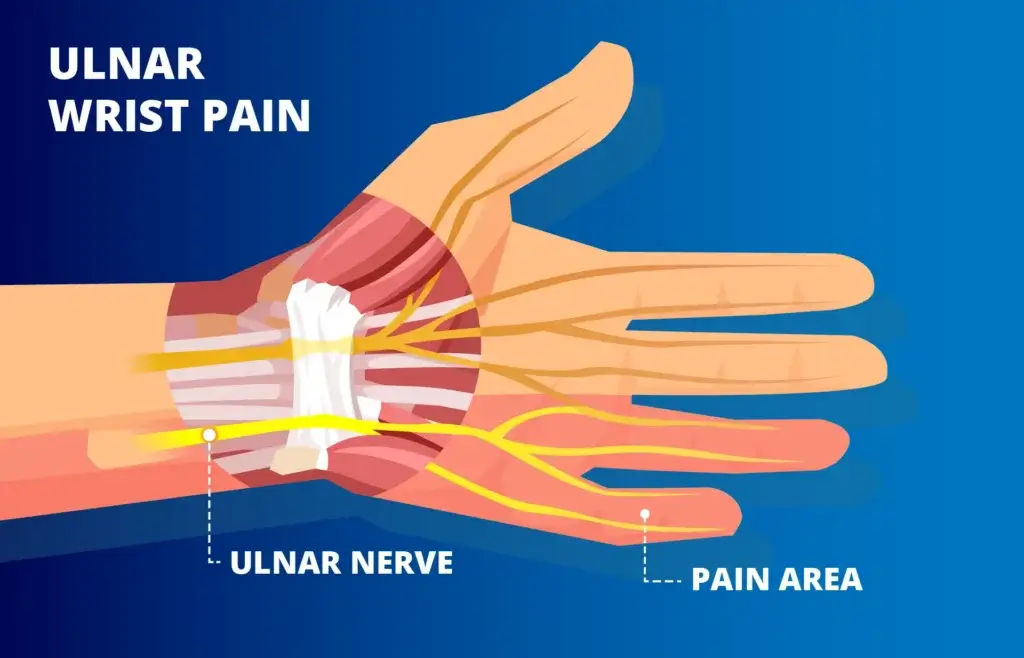
- Ulnar Nerve: Running through the wrist and into the hand, this nerve controls sensation in the ring and pinky fingers. When compressed, it can cause tingling or numbness that worsens with pressure.
- Tendons and Ligaments: These connective tissues keep the wrist steady and transfer force during gripping or lifting. Overuse, repetition, or awkward wrist angles can inflame them over time.
- Ulnar and Carpal Bones: The bones on this side of the wrist support rotation and balance. A small shift, fracture, or joint misalignment can make even light activity painful.
Understanding which of these structures is affected is the first step toward relief because the right treatment depends on the true source of the pain.
Common Causes of Ulnar Wrist Pain
With so many moving parts packed into a small space, it’s no surprise that pain on the pinky side of the wrist can have several possible causes. The challenge is that many of these structures, tendons, ligaments, cartilage, and nerves, work closely together, so symptoms often overlap. Some problems stem from simple overuse, while others involve deeper joint or nerve irritation.
Ulnar Tendonitis
Tendons on the ulnar side of the wrist help stabilize your grip and support twisting motions. Because these tendons work constantly, typing, gripping, or lifting, they’re prone to irritation and overuse. Tendonitis can develop in almost any tendon in the body, but the hands and wrists are especially vulnerable due to how often we use them. The pain often increases with rotation or squeezing motions and usually improves with short rest, activity changes, or supportive care.
TFCC Tear (Triangular Fibrocartilage Complex Injury)
The TFCC acts like a small cushion that keeps your wrist stable and smooth during movement. When this cartilage tears from overuse or a sudden twist, like catching yourself during a fall or lifting something heavy, you may feel pain when turning your wrist or pushing off from a surface. Minor tears can often heal with rest or bracing, while larger ones may need medical treatment to restore stability.
Ulnar Impaction Syndrome
This condition happens when the ulna bone presses too firmly against the wrist joint, wearing down the cartilage that normally provides smooth movement. It’s more common in people who naturally have a slightly longer ulna or who repeat high-impact wrist motions, such as swinging a bat or using tools. The pain often feels like a deep, dull ache that worsens with twisting or gripping and can limit how much pressure you comfortably place on your wrist.
Pisiform or Small Bone Pain
The pisiform is a tiny, pea-shaped bone on the outside of your wrist that absorbs pressure when your hand is flat against a surface. Activities like cycling, yoga, or pushups can irritate it, especially if you lean on your hands often. This irritation can make the wrist tender to touch or sore when bending backward, but it usually improves once the pressure is reduced or the technique is adjusted.
Nerve Compression (Ulnar Tunnel Syndrome)
Most people have heard of carpal tunnel syndrome, which affects the median nerve. Ulnar tunnel syndrome is similar but impacts the ulnar nerve on the pinky side. Compression in this area can cause tingling, numbness, or weakness in the ring and pinky fingers. Symptoms often worsen with pressure or repetitive wrist movements.
Diagnosing Ulnar Wrist Pain
With so many small structures packed into one side of the wrist, pinpointing the exact source of pain isn’t always simple. Two people can feel discomfort in the same spot for completely different reasons; one may have an irritated tendon, while another has cartilage or nerve involvement. That’s why a clear diagnosis starts with a thorough evaluation.
Physical Exam and Patient History
During your visit, your provider will gently test your wrist’s range of motion, strength, and sensitivity to touch. They may ask about recent activities, repetitive motions, or any injuries to help narrow down possible causes.
Imaging Tests and Advanced Evaluation
If needed, imaging tests like X-rays, MRI scans, or a wrist arthroscopy can reveal hidden issues such as small bone fractures, ligament tears, or cartilage damage.
Tip: Getting a proper diagnosis early can help prevent further joint damage and keep your wrist strong and functional over time.
Treatment Options for Ulnar Wrist Pain
Most cases of ulnar wrist pain improve without surgery, especially when caught early. The goal is to reduce irritation, restore motion, and prevent long-term stiffness.
Common treatment approaches include:
- Rest and Immobilization: Taking a short break from repetitive activity and using a wrist brace can give tendons and soft tissues time to heal.
- Physical Therapy: Guided exercises help strengthen supporting muscles and improve flexibility, which can relieve strain on the joint.
- Anti-Inflammatory Care: Ice, medication, or targeted injections can calm inflammation and reduce swelling that limits motion.
Advanced Treatments
When pain stems from cartilage or ligament damage, or when nerve compression causes persistent weakness or tingling, advanced procedures may be recommended.
- Arthroscopic Wrist Repair: Using small incisions and a tiny camera, surgeons can visualize the inside of the joint and repair torn ligaments or damaged cartilage with minimal disruption to surrounding tissue.
- TFCC Reconstruction: In more complex cases, the triangular fibrocartilage complex may need to be reconstructed to restore wrist stability and eliminate chronic pain.
- Nerve Decompression: If the ulnar nerve is being pinched as it passes through the wrist (a condition similar to carpal tunnel), a decompression procedure can relieve pressure, often restoring normal sensation and strength.
When to See a Wrist Specialist
If wrist pain lasts more than a week, keeps you from everyday tasks, or causes numbness in your ring or pinky fingers, it’s time to see a specialist. Persistent swelling, weakness, or pain that worsens with twisting or gripping can signal a deeper issue that won’t improve with rest alone.
At Andrews Institute Ambulatory Surgery Center, our affiliated orthopedic and hand specialists diagnose and treat a wide range of wrist conditions, from tendon inflammation to complex cartilage injuries. Many procedures are performed on an outpatient basis, helping patients recover faster and return home the same day.
Your hands and wrists do more work than you realize. Don’t let pain limit what you can do. Getting expert care early helps protect long-term strength and flexibility.