
What Is the Shoulder Labrum
The shoulder labrum is a ring of cartilage that lines the socket of the shoulder joint and helps provide stability while allowing a wide range of motion. Often called the glenoid labrum, it deepens the socket so the upper arm bone stays securely in place during movement. Labrum injuries are common in athletes and active adults because repetitive overhead motions, contact sports, falls, or sudden pulling forces place repeated stress on this stabilizing structure.
What Is a Glenoid Labrum Tear
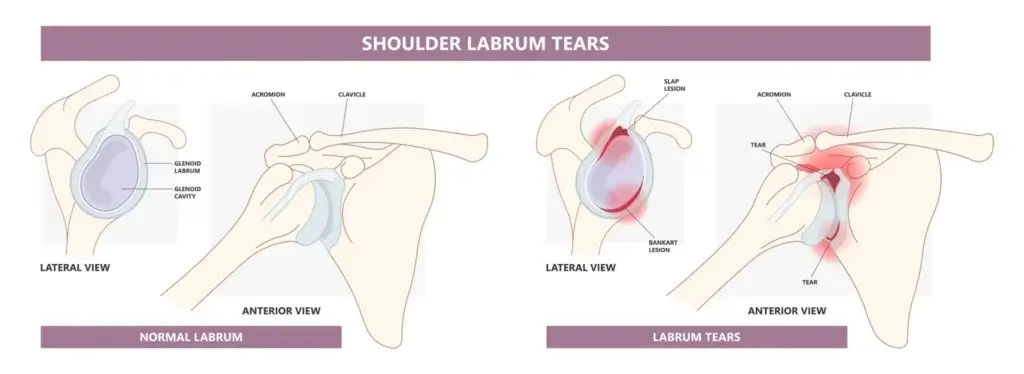
A glenoid labrum tear occurs when the cartilage that lines and stabilizes the shoulder socket becomes damaged or torn. This type of injury can develop after a traumatic event, such as a fall or shoulder dislocation, or gradually from repetitive overhead movements that strain the joint over time. Age-related wear can also weaken the labrum, making it more prone to tearing. While there are different types of labrum tears based on where the damage occurs, all can affect shoulder stability, strength, and range of motion.
Shoulder Labrum Tear Symptoms
Shoulder labrum tear symptoms can vary based on the type of tear, how it occurred, and a person’s activity level. Some people notice symptoms right away after an injury, while others experience gradual discomfort that worsens with certain movements or activities.
Common Torn Labrum Shoulder Symptoms
- Deep shoulder pain, especially during overhead or rotational movement
- Clicking, popping, or catching sensations within the joint
- A feeling of shoulder weakness or instability
- Limited range of motion or stiffness
- Pain that worsens at night or when sleeping on the affected side
How a Shoulder Labrum Tear Is Diagnosed
Diagnosing a shoulder labrum tear starts with a detailed clinical evaluation and a review of symptoms, activity history, and any prior injuries. During the physical exam, a provider may perform a shoulder labrum tear test to assess stability, strength, and pain with specific movements. Imaging studies, such as an MRI or MRI arthrogram, are often used to confirm the presence and extent of a tear. An accurate diagnosis is essential for determining the most appropriate treatment approach and avoiding unnecessary or ineffective care.
Treatment Options for a Torn Shoulder Labrum
Treatment for a torn shoulder labrum depends on the severity of the tear, the patient’s activity level, and how much the injury affects daily function. Some labrum injuries respond well to conservative care, while others may require surgical intervention to restore shoulder stability and reduce pain.
Non-Surgical Treatment for a Torn Labrum
Not all shoulder labrum tears require surgery. In many cases, treatment begins with rest and activity modification to reduce strain on the joint. Physical therapy plays a key role in improving shoulder strength, stability, and range of motion, which can help compensate for labrum damage. Pain and inflammation may be managed with medication or other conservative approaches. For some patients, this plan supports effective torn labrum shoulder recovery without surgery, especially when symptoms are mild to moderate.
Surgical Treatment for a Shoulder Labrum Tear
Surgery may be recommended when symptoms persist despite conservative care or when the tear causes significant instability or loss of function. Labrum repair surgery is designed to restore stability to the shoulder by reattaching or repairing the damaged cartilage. Many torn labrum surgeries are performed using minimally invasive techniques, which can reduce tissue disruption and support a more efficient recovery compared to traditional open procedures.
Shoulder Labrum Tear Recovery Time
Recovery time for a shoulder labrum tear varies based on the type of tear and the treatment approach. With non-surgical care, many patients see gradual improvement as strength and stability return through physical therapy and activity modification. After labrum surgery, recovery typically involves a structured rehabilitation process that focuses on protecting the repair, restoring range of motion, and rebuilding strength over time. Factors such as activity level, commitment to rehabilitation, and following post-treatment guidance all play an important role in how smoothly and efficiently recovery progresses.
When to Seek Care for Shoulder Labrum Pain
Persistent shoulder pain, instability, or symptoms that continue to worsen despite rest or physical therapy are signs that it may be time to see a specialist. Difficulty performing daily activities, working, or participating in sports can also indicate a shoulder labrum injury that needs professional evaluation. Identifying the cause early helps prevent further damage and supports more effective treatment.
At Andrews Institute, our team has extensive experience diagnosing and treating shoulder injuries, including labrum tears. Care is tailored to each patient based on the severity of symptoms, activity level, and personal goals, with support across conservative treatment, surgical options, and recovery. If you are experiencing ongoing shoulder pain or instability, connecting with our team can help you better understand your condition and explore appropriate care options.